
Managing money can feel difficult when you don’t know exactly where your income is going. You may earn enough to cover your bills but still find yourself wondering why there is little money left at the end of the month.
A monthly budget can help solve this problem. It gives you a clear picture of your income, expenses, savings, and spending habits. More importantly, budgeting allows you to make financial decisions before your money disappears.
If you are completely new to personal finance, don’t worry. You don’t need complicated spreadsheets or advanced financial knowledge. With a few simple steps, you can create a monthly budget that fits your lifestyle and financial goals.
What Is a Monthly Budget?
A monthly budget is a simple plan that shows how you intend to use your money during a particular month. It usually includes your monthly income, fixed expenses, variable expenses, savings, debt payments, and discretionary spending.
Think of your budget as a roadmap for your finances. Instead of wondering where your money went, you decide in advance where it should go.
A basic monthly budget may include:
- Monthly salary or other income
- Rent or home expenses
- Utility bills
- Groceries
- Transportation
- Insurance
- Debt payments
- Entertainment
- Shopping
- Emergency savings
- Investments
- Other personal expenses
The purpose of budgeting isn’t necessarily to stop spending. It is to make sure your spending reflects your priorities.
Why Is Creating a Monthly Budget Important?
Without a budget, small purchases can easily add up. A coffee here, an online subscription there, and frequent food deliveries may not seem significant individually. However, together they can create a noticeable gap in your finances.
Creating a monthly budget helps you understand your spending patterns and identify areas where your money can be used more effectively.
Some important benefits include:
- Better control over your spending
- Improved savings habits
- Fewer financial surprises
- Easier debt management
- Better preparation for emergencies
- Greater awareness of unnecessary expenses
- Progress toward short-term and long-term goals
A budget can also reduce financial stress because you have a clearer understanding of what you can afford.
Step 1: Calculate Your Monthly Income
The first step in creating a monthly budget is determining how much money you have available.
If you receive a fixed salary every month, this calculation is relatively simple. Use your take-home pay rather than your gross salary because taxes and other deductions may already have been removed.
If your income changes from month to month, budgeting requires a little more planning. Consider using a conservative estimate based on your typical income.
Your monthly income may come from:
- Salary
- Freelance work
- Business income
- Part-time employment
- Rental income
- Interest income
- Other reliable sources
Avoid including uncertain income when planning essential expenses. It is safer to build your budget around money you reasonably expect to receive.
Step 2: List Your Fixed Expenses
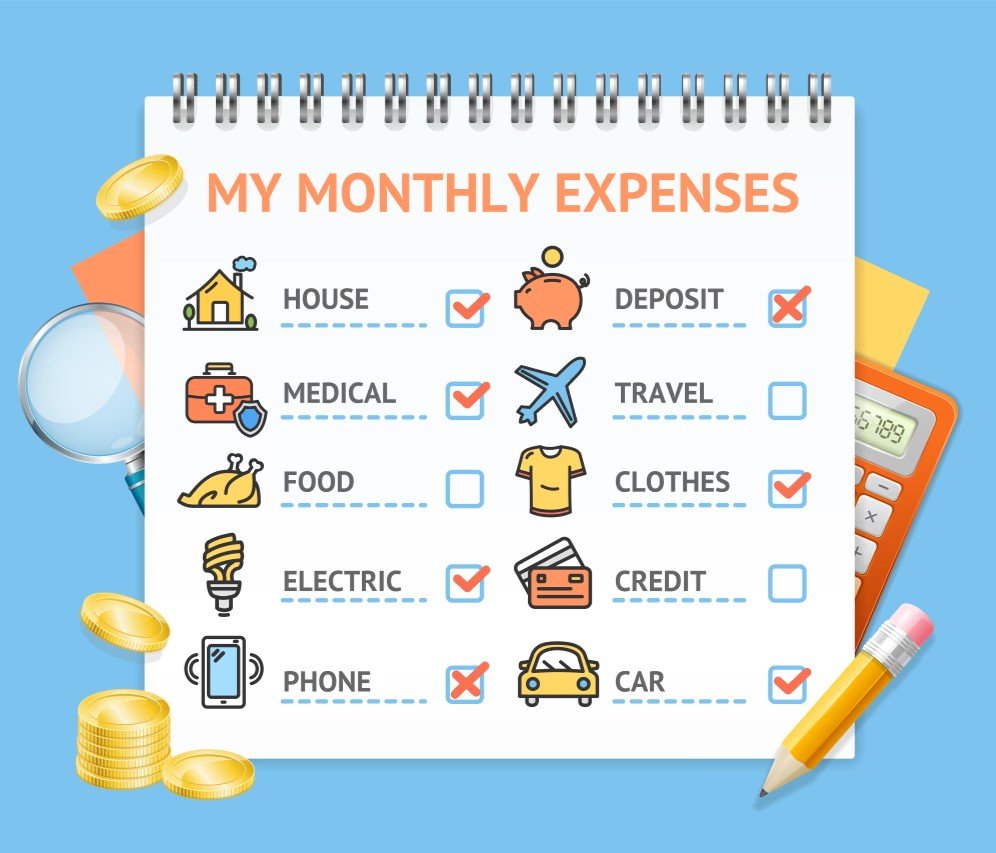
Fixed expenses are costs that generally remain the same or relatively predictable each month.
These expenses should be included early in your monthly budget because they usually need to be paid regardless of your other spending decisions.
Common fixed expenses include:
- Rent or home loan payments
- Insurance premiums
- Loan payments
- School or tuition fees
- Internet plans
- Mobile plans
- Subscription services
- Regular investments
Some fixed expenses may change occasionally, but their amounts are usually easier to predict than variable expenses.
Once you know how much your essential fixed costs are, you will have a better idea of how much money remains for other priorities.
Step 3: Track Your Variable Expenses
Variable expenses are costs that can change from one month to another.
This category is often where people discover that they are spending more than expected. Tracking these expenses for at least one month can reveal patterns that are difficult to notice otherwise.
Examples include:
- Groceries
- Fuel
- Dining out
- Clothing
- Entertainment
- Online shopping
- Personal care
- Travel
- Gifts
- Recreation
Don’t try to estimate everything from memory. Check your bank statements, credit card statements, digital wallets, and receipts to get a more accurate picture.
Step 4: Separate Needs From Wants
One of the simplest budgeting techniques is separating your expenses into needs and wants.
Needs are expenses required for basic living and important financial responsibilities. Wants are purchases that improve your lifestyle but aren’t essential.
Needs may include:
- Housing
- Basic groceries
- Electricity
- Transportation
- Healthcare
- Insurance
- Minimum debt payments
Wants may include:
- Restaurant meals
- Expensive gadgets
- Entertainment subscriptions
- Luxury shopping
- Vacations
- Premium memberships
This doesn’t mean you should eliminate every want. Instead, identifying them gives you more control over discretionary spending.
Step 5: Set a Savings Target

Saving should be treated as part of your monthly budget rather than something you do only when money is left over.
A useful approach is to decide how much you want to save at the beginning of the month and include it as a planned expense.
Your savings goals might include:
- Emergency fund
- Vacation
- New laptop or phone
- Education
- Home purchase
- Retirement
- Investment portfolio
- Future business plans
Even a small amount can help develop a consistent savings habit.
If your current budget is tight, start with an amount that feels realistic. You can increase it gradually as your income or financial situation improves.
Step 6: Build an Emergency Fund
An emergency fund is money kept aside for unexpected expenses.
Life rarely follows a perfect financial plan. Medical bills, job changes, vehicle repairs, or urgent family expenses can appear without warning.
Without emergency savings, you may have to rely on credit cards or loans to handle unexpected costs.
When creating your monthly budget, consider setting aside a specific amount for your emergency fund.
A good starting point is to build a small cash reserve first. Over time, you can work toward having several months of essential expenses saved.
Keep emergency money somewhere relatively accessible rather than investing money that you may need immediately.
Step 7: Plan Your Debt Payments
If you have loans or credit card balances, debt repayment should have a clear place in your budget.
Start by listing each debt along with:
- Outstanding balance
- Interest rate
- Minimum monthly payment
- Payment due date
Always make at least the required minimum payment on time. Late payments can lead to additional charges and may affect your credit history.
After covering minimum payments, you can decide how to allocate extra money toward debt reduction.
Two common approaches are the debt avalanche and debt snowball methods. The avalanche method generally focuses on higher-interest debt first, while the snowball method focuses on smaller balances first.
Choose an approach that you can follow consistently.
Step 8: Choose a Budgeting Method
There isn’t one budgeting method that works for everyone. The best system is one you can actually maintain.
50/30/20 Budget
The 50/30/20 approach divides after-tax income into three broad categories:
- 50% for needs
- 30% for wants
- 20% for savings and debt repayment
These percentages are guidelines rather than strict rules. Housing costs, income levels, family responsibilities, and location can make different allocations more realistic.
Zero-Based Budget
With a zero-based budget, every unit of income is assigned a purpose.
For example, your income could be divided between:
- Housing
- Food
- Transportation
- Bills
- Savings
- Investments
- Debt payments
- Entertainment
The goal is for income minus planned allocations to equal zero.
This doesn’t mean you spend everything. Savings and investments are also assigned categories.
Pay-Yourself-First Method
This method prioritizes saving before discretionary spending.
When your income arrives, you transfer a predetermined amount into savings or investments. The remaining money is then used for expenses.
This approach can be useful for people who struggle to save whatever remains at the end of the month.
Step 9: Use a Budgeting Tool
You don’t need expensive software to manage a monthly budget.
You can use:
- A notebook
- Excel
- Google Sheets
- A budgeting app
- Personal finance software
- A simple expense-tracking system
The important thing is consistency.
A budgeting tool should make your financial life easier, not more complicated. If a detailed spreadsheet takes too much time to maintain, start with a simple list of income, expenses, savings, and remaining balance.
Step 10: Review Your Budget Every Week
Creating a budget once isn’t enough. Your actual spending may be different from what you planned.
Spend a few minutes each week reviewing your transactions.
Ask yourself:
- How much have I spent so far?
- Are any categories going over budget?
- Did I make an unexpected purchase?
- How much money remains?
- Am I still on track with my savings goal?
Weekly reviews allow you to make small adjustments before the month gets away from you.
Example of a Simple Monthly Budget
Suppose someone earns ₹50,000 per month after taxes and deductions.
A simple budget might look like this:
| Category | Planned Amount |
|---|---|
| Rent | ₹12,000 |
| Groceries | ₹6,000 |
| Transportation | ₹3,000 |
| Utilities & Internet | ₹3,000 |
| Insurance | ₹2,000 |
| Debt Payment | ₹5,000 |
| Savings | ₹7,000 |
| Investments | ₹4,000 |
| Entertainment | ₹3,000 |
| Personal Expenses | ₹3,000 |
| Emergency Fund | ₹2,000 |
| Total | ₹50,000 |
This is only an example. Your own budget should reflect your income, location, family situation, financial obligations, and personal goals.
Common Budgeting Mistakes to Avoid
Many beginners create a budget but stop using it after a few weeks. Usually, the problem isn’t budgeting itself. The problem is creating a system that is too difficult or unrealistic.
Avoid these common mistakes:
1. Forgetting Irregular Expenses
Annual insurance payments, festivals, birthdays, repairs, and travel can create large expenses.
Instead of ignoring them, estimate their yearly cost and set aside a small amount each month.
2. Making the Budget Too Strict
A budget that eliminates every enjoyable activity may be difficult to maintain.
Leave some room for entertainment and personal spending. A realistic plan is generally easier to follow than an extremely restrictive one.
3. Ignoring Small Purchases
Small expenses can become significant when repeated frequently.
Track subscriptions, delivery fees, snacks, online purchases, and other recurring small expenses.
4. Not Updating the Budget
Your financial situation can change.
A salary increase, new loan, relocation, family responsibility, or change in monthly bills may require you to adjust your budget.
5. Treating Savings as an Afterthought
If savings only happen when money remains at the end of the month, you may struggle to build consistency.
Make savings a planned category from the beginning.
How to Make Your Monthly Budget Easier to Follow
A good budget doesn’t need to feel restrictive. The goal is to create a system that works with your lifestyle.
Try these practical habits:
- Automate savings whenever possible.
- Review your expenses weekly.
- Cancel subscriptions you rarely use.
- Compare prices before major purchases.
- Set spending limits for discretionary categories.
- Keep an emergency fund separate from everyday spending.
- Avoid impulse purchases by waiting before buying non-essential items.
- Adjust your budget when your income changes.
- Celebrate progress toward financial goals.
Small improvements can have a meaningful effect over time.
How Often Should You Create a Budget?
Ideally, you should create or update your budget every month.
At the beginning of each month, estimate your income and planned expenses. During the month, track actual spending. At the end of the month, compare your plan with reality.
This gives you useful information for the following month.
For example, if you consistently spend ₹8,000 on groceries despite budgeting ₹6,000, you may need to adjust the grocery category rather than repeatedly treating the difference as a failure.
Budgeting is a process of learning and adjustment.
Final Thoughts
Learning how to create a monthly budget is one of the simplest ways to become more aware of your personal finances. A budget helps you understand where your money goes and gives you a framework for making better spending and saving decisions.
Start with the basics: calculate your income, list your expenses, separate needs from wants, set savings goals, and track your actual spending.
Don’t worry if your first budget isn’t perfect. Your financial situation will change, and your budget should change with it. The real goal isn’t to predict every expense perfectly. It’s to develop a habit of making intentional decisions with your money.
With regular reviews and small adjustments, a monthly budget can become a practical tool for building an emergency fund, reducing debt, increasing savings, and working toward your long-term financial goals.