
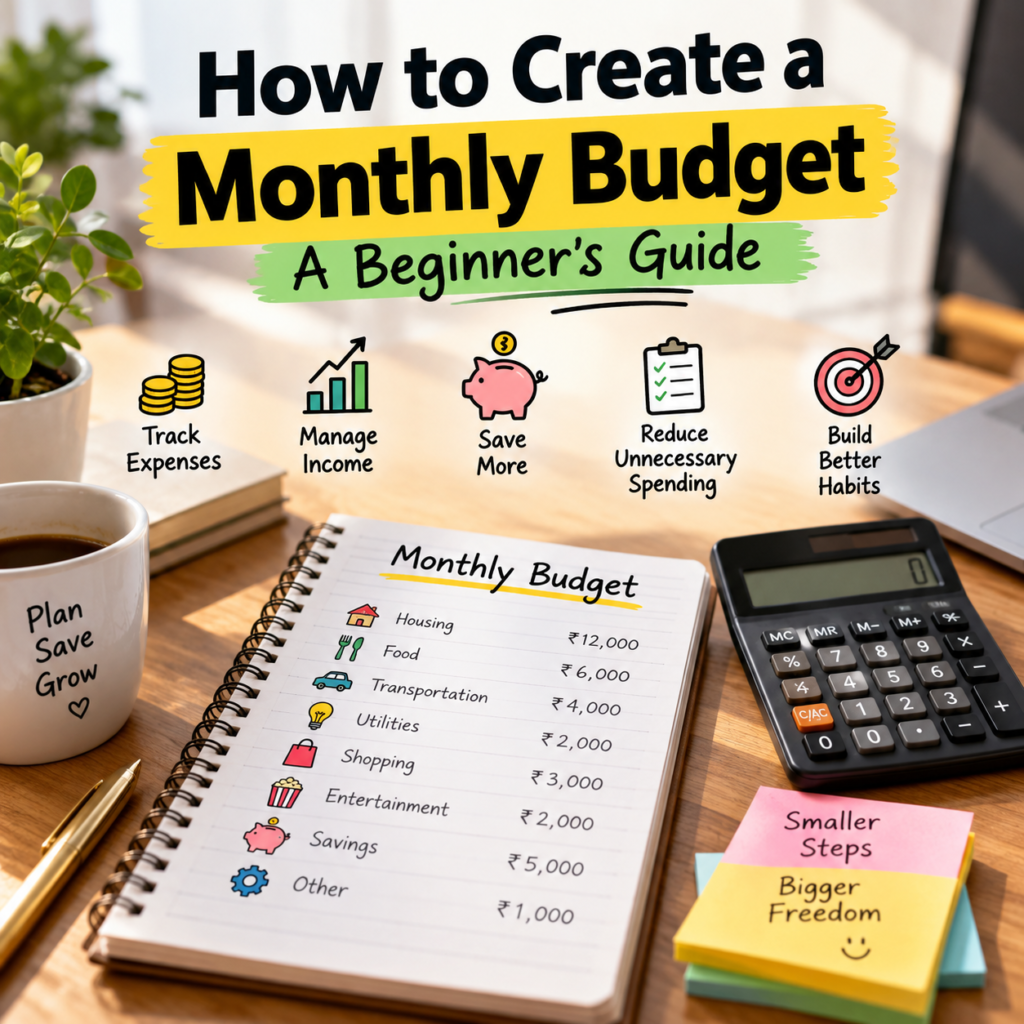
How to Create a Monthly Budget: A Beginner’s Guide 2026
Managing your finances can prove to be more challenging than you anticipated if you do not have a proper understanding of where your hard-earned money goes. Even if you have sufficient income to meet all your expenses, there might still be times when you wonder where all your money went in a blink of an eye. A monthly budget can help you avoid such situations because it serves as an ultimate guide to managing your earnings, expenses, debts, and savings. Moreover, it enables you to stay ahead of your spending. If you have no prior knowledge or experience regarding finances, do not worry. We have a practical solution that all newcomers can follow to create a comprehensive monthly budget with ease and convenience. The Ultimate Guide on How to Make a Monthly Budget What Is a Monthly Budget? A monthly budget simply means a plan or an estimate of how you intend to spend your monthly income. It is a self-explanatory record that highlights your monthly income, expenses, savings, and debts. In other words, a budget helps you understand what you want to achieve financially. It prevents unplanned spending and puts financial discipline in your spending pattern. A sample monthly budget may consist of the following: The objective of a monthly budget is not to restrict your spending. It aims to help you prioritize your expenses according to your financial status and the achievement of your financial goals. Why Creating a Monthly Budget Is Worth Your Time? Without a financial plan, it becomes impossible to keep track of your expenses. It can also be overwhelming when you realize how much you actually spend on a cup of coffee or other mindless activities. In such a case, a well-crafted monthly budget can become your best friend. Here are some reasons why a budget is essential: A monthly budget can also help you stay calm and relaxed about your finances. How to Make a Monthly Budget: Step-by-Step Guide? The simplest method to create a monthly budget is to calculate your monthly income first. If you have a permanent or a stable source of income, then it will be easier for you to prepare an estimated record of your monthly earnings. Remember, you should consider your net income (the amount of money earned after deducting all applicable taxes) while creating a monthly budget. On the other hand, if your income varies from month to month, then you should create a realistic estimate based on your average monthly earnings. For instance, your monthly income consists of: List All Your Fixed Monthly Expenses When we talk about the monthly budget, the first thing that comes to mind is monthly expenses. A monthly budget should ideally highlight your monthly expenses, which include both your fixed and variable expenses. Start with your monthly fixed expenses because they remain the same or vary slightly every month. 2. Some common examples of monthly fixed expenses are: So, after calculating your monthly income, keep a track of all your monthly bills to determine how much percentage of your income is utilized in your monthly expenses. Variable expenses are the ones that vary from time to time or from one month to another. It is always a good idea to keep a track of your variable expenses for at least a month to identify your monthly spending pattern. Some common examples of variable expenses are: In this step, instead of estimating your expenses, it is better to go through your bank account statements or digital wallet transactions and categorize them accordingly. One of the easiest but the most effective ways to create a monthly budget is to sort your expenses into needs vs wants. Your needs mean the things that you cannot live without, whereas your wants are just luxuries that you can live without. For instance, your needs may include: However, your wants may include dining out, latest gadgets and technology, entertainment subscriptions, etc. It is a myth that people with a good income do not save any money. The truth is that people with a high income can also save a significant amount of money if they have a proper budgeting plan. So, it is essential to set realistic monthly savings objectives. To begin with, keep in mind that in a good monthly budget, at least 10% of your income should be allocated towards your savings. In most cases, people save money with specific purposes in mind, such as: So, to begin with, decide on your monthly savings target because it will keep you motivated as you will feel that all your hard work is leading you towards the achievement of your financial goals. An emergency fund plays a critical role in every person’s financial journey. A sudden emergency, unplanned medical expenses, or car repaircan cause a sudden withdrawal of your hard-earned money at the wrong time So, when creating your monthly budget, you should also keep in mind to set aside some money for your emergency fund. To begin with, it is a good idea to save at least Rs. 500 from your monthly income as an emergency fund. However, once your emergency fund grows significantly, you should invest that in a separate bank account so that you cannot just keep touching the money in case of minor issues. In the long run, it is a good idea to save at least 6 months of living expenses as your emergency fund. If you have any loans or credit card dues, then it is essential to highlight your monthly debt repayment plan in your monthly budget. To begin with, create a list of all your debts, along with their interest rates, outstanding amount, and minimum monthly payment. In your monthly budget, always make sure that the money you keep aside for your debt comprises the minimum amount owed. Always pay off that minimum amount on time so that you do not have to pay any late fees. In addition, you can also pay an extra amount to pay